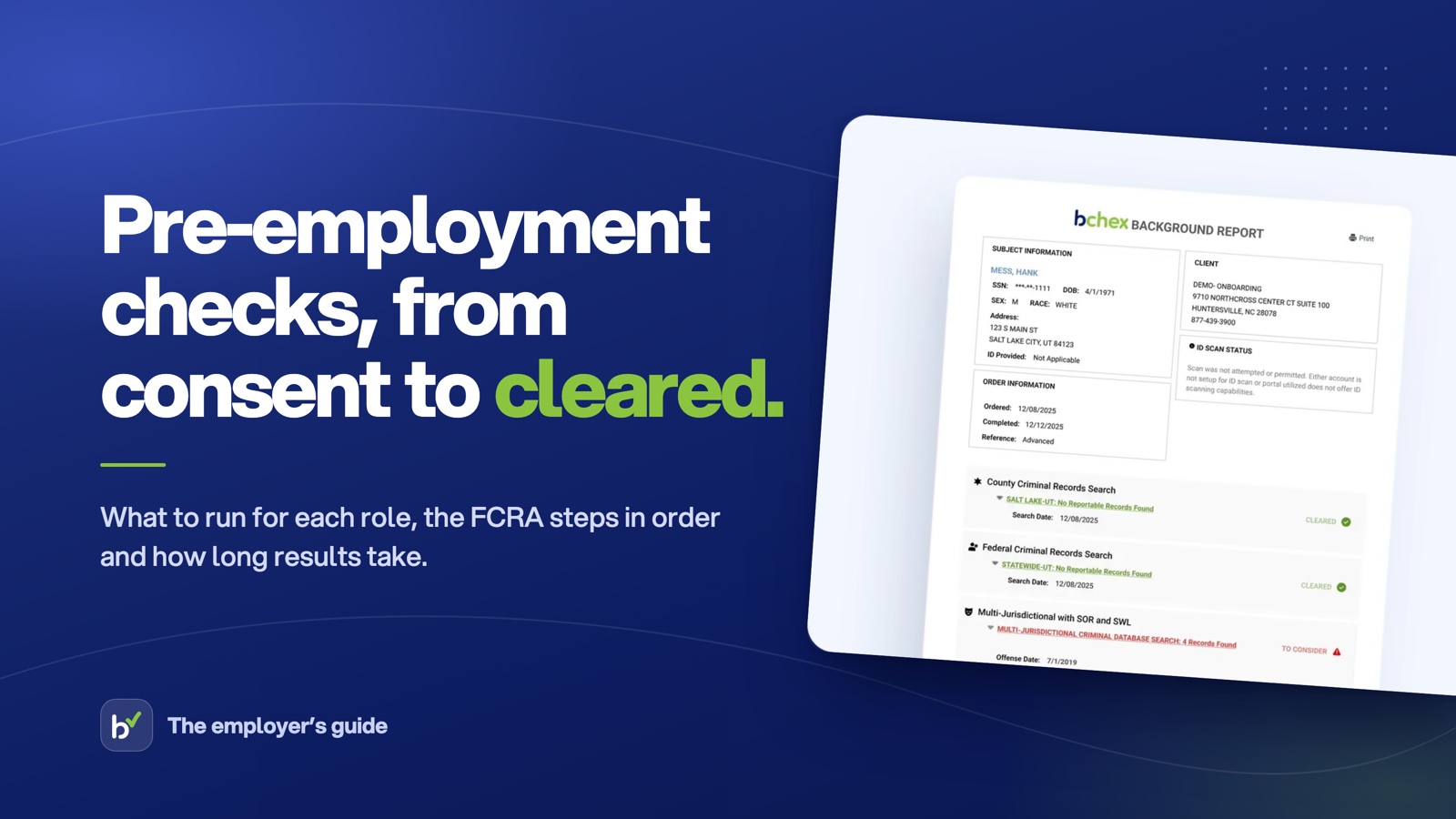
A pre-employment background check is a review of a job candidate’s records, such as criminal history, identity, past jobs and education, that an employer runs before the person starts. If you use a background check company, federal law requires a written disclosure and the candidate’s permission first. Most checks come back in one to three business days.
Decide what each role needs and screen everyone in that role the same way. Get permission first with a stand-alone disclosure and a signed authorization. Search county court records, not just a national database. If a record might change your decision, follow the two-notice adverse action process. Expect most results in one to three business days.
What a pre-employment background check includes
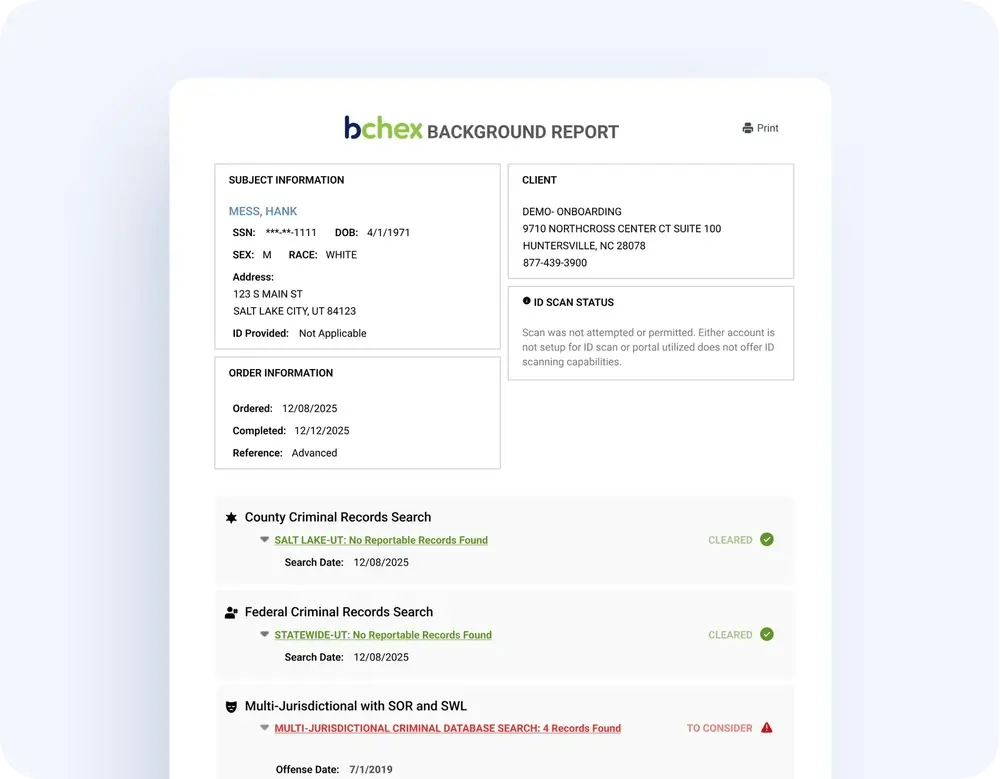
There’s no single standard package. Most employers start with identity and criminal searches, then add the checks that match the job. Here’s what each search covers.
| Check | What it shows |
|---|---|
| Identity and address history | Confirms the candidate is who they say they are and lists past addresses and names, which tells you where to search for records. |
| County criminal search | Felony and misdemeanor cases from the county courts where the candidate has lived. Courthouse records are the most direct source. |
| Statewide and federal criminal searches | State court and repository records, plus federal court records, which cover federal crimes such as fraud and tax offenses that never reach a county court. |
| National criminal database | A broad multi-state scan that can surface records in places you didn’t think to look. Treat a match as a lead and confirm it at the county court. |
| Sex offender registry | Registrations across state registries. Standard for roles that involve children or vulnerable adults. |
| Employment verification | Past employers, job titles and dates. Employment and education verification confirms what the résumé says. |
| Education and license verification | Degrees, certifications and professional licenses, checked with the school or licensing board. |
| Motor vehicle record (MVR) | License status, violations and suspensions, for any role that involves driving. See MVR checks. |
| Drug testing | Lab panel results for safety-sensitive roles, where your policy and state law allow. See drug testing. |
How the pre-employment background check process works
When you use a background check company, the Fair Credit Reporting Act (FCRA) sets the order of steps. The Federal Trade Commission explains the rules in its guide for employers. Here’s the sequence most employers follow.
Decide what each role needs
Write down which checks each role gets, based on what the job involves. Screening everyone in the same role the same way keeps decisions consistent.
Give the disclosure and get permission
Tell the candidate in writing that you’ll get a background report, in a document that contains only that disclosure, and get their written authorization. Some states and cities require their own notices too.
Order the checks
Submit the order with the candidate’s details. The searches run at the same time, and you can see each one as it comes back.
Review the results against the job
Read each record in light of the role, not a blanket rule. The EEOC’s guidance on arrest and conviction records points to three factors: the nature of the offense, how long ago it happened and how it relates to the job.
Send a pre-adverse action notice first
Before you decide against a candidate because of the report, send a notice with a copy of the report and “A Summary of Your Rights Under the Fair Credit Reporting Act.” Then give the candidate a reasonable amount of time to respond. Many employers wait at least five business days.
Make the final decision and close the loop
If you don’t move forward, send an adverse action notice. It includes the background check company’s contact details, a statement that the company didn’t make the decision, and the candidate’s right to dispute the report and to get a free copy within 60 days. More in adverse action in background screening.
How long a pre-employment background check takes
Most pre-employment checks take one to three business days. Electronic searches can come back within hours. County searches where a clerk has to pull the file, schools that are slow to answer education checks and verifications of older jobs take longer.
At Bchex, about 85% of eligible searches come back within 24 hours, and more than 70% within 6 hours. Qualifying searches are back within one business day, or that search is free (see what qualifies). For a search-by-search breakdown, see how long background checks take.
What a pre-employment background check costs
Most standard employment background checks cost $30 to $150 per candidate, depending on what’s included. An identity and criminal package sits at the low end. Employment and education verification, a driving record or a drug test move it up, and some states and counties charge their own court or access fees on top.
For a breakdown by package, see how much a background check costs.
Laws to know before you screen
Federal law sets the baseline, and states and cities add to it.
- The Fair Credit Reporting Act (FCRA) covers any report you get from a background check company: the disclosure and authorization, the adverse action steps and limits on older records. Arrests that didn’t lead to a conviction generally can’t be reported after seven years, though that limit doesn’t apply to jobs paying $75,000 or more, and convictions have no federal time limit. See how far back a background check goes.
- EEOC guidance on arrest and conviction records asks employers to weigh each record against the job instead of applying blanket bans.
- Fair chance laws, often called ban-the-box laws, limit when many employers can ask about criminal history, often not until after a conditional offer. Some also require extra notices or a written assessment.
- State limits on what can be reported or considered, such as shorter look-back periods for convictions in some states.
- Industry rules for regulated roles, such as Department of Transportation requirements for commercial drivers and screening rules for schools.
Which checks to run for each role
The more access, trust or vulnerability a role involves, the more screening it calls for. Here’s a common starting point.
| Role | Common checks |
|---|---|
| Office and administrative roles | Identity and address history, county and national criminal searches, and employment verification. |
| Drivers and delivery roles | The above plus a motor vehicle record. Commercial drivers also need Department of Transportation drug and alcohol testing. |
| Finance and roles with access to money | The above plus federal criminal searches, education and license verification, and a credit report where state law allows it. |
| Healthcare roles | Criminal searches, license verification and healthcare sanctions checks, such as the federal exclusion list for facilities that bill Medicare or Medicaid. |
| Roles with children or vulnerable adults | Criminal searches in every county of residence, the sex offender registry, and ongoing record monitoring after hire with Chex365. |
| Executives | Broader criminal and civil searches, education and employment verification, and professional license checks. |
Common mistakes to avoid
Database records can be incomplete or out of date. Treat a match as a lead and confirm it at the county court before you act on it.
The FCRA disclosure needs a document of its own. Folding it into an application or offer letter doesn’t meet that requirement.
Run the same checks for everyone in the same role, so every decision follows the same standard.
The notice gives candidates a chance to explain or correct a record before you decide. Mismatched identities and outdated records do happen.
An arrest is an accusation. A conviction is a finding of guilt. Read each record for what it is. More in arrests vs. convictions.
A check shows one moment in time. For roles with ongoing access to children, money or sensitive data, many employers add periodic rescreening or continuous criminal monitoring.
Pre-employment background check checklist
Use this list to set up your process, or to check the one you have.
- Write down the checks each role needs and why.
- Check the fair chance rules in every state and city where you hire.
- Choose a PBSA-accredited background check company.
- Give the FCRA disclosure in a document of its own.
- Get the candidate’s signed authorization.
- Add any state or city notices that apply.
- Review each record against the role.
- Send a pre-adverse action notice with the report and the summary of rights.
- Wait a reasonable time and consider the candidate’s response.
- Send the adverse action notice if you don’t move forward.
- Store reports securely, apart from personnel files.
Running pre-employment checks with Bchex
Bchex has run background checks since 1995. It’s PBSA-accredited, more than 2,000 organizations use it, and it has run more than 40 million checks. Searches draw on 5,000+ data sources, including direct courthouse records.
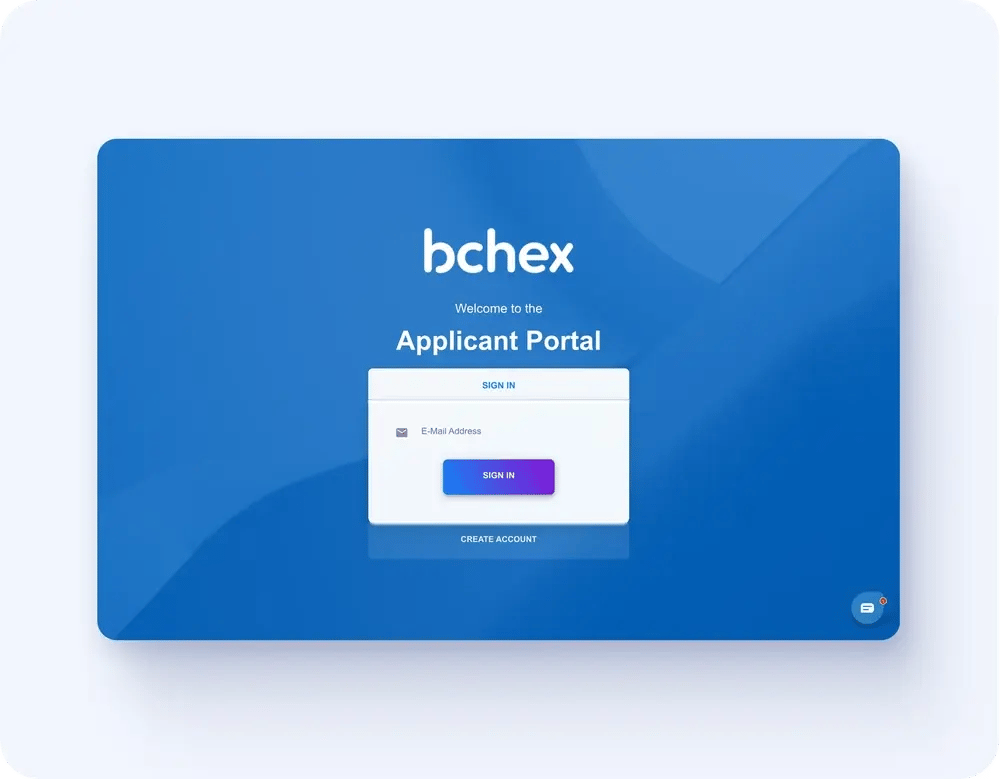
Candidates enter their details in the applicant portal, your team tracks every order in one dashboard, and Bchex connects with major HR platforms through integrations and an open API. See how Bchex background checks work.
Frequently asked questions
What is a pre-employment background check?+
What does a pre-employment background check include?+
How long does a pre-employment background check take?+
Do employers need permission to run a background check?+
How far back does a pre-employment background check go?+
Does a pre-employment background check show employment history?+
What can make a candidate fail a pre-employment background check?+
How much does a pre-employment background check cost?+
Run your next pre-employment check with Bchex
Background checks for employers, with about 85% of eligible searches back within 24 hours.