
A church background check policy is a short written plan that says who your church screens, which checks each role gets, how you collect consent, who reviews the results and how often people are rescreened. Most churches cover every staff member and volunteer who serves with children, youth or vulnerable adults, and finish every check before someone starts serving.
Write it down and have leadership approve it. Cover everyone who serves with children, youth or vulnerable adults, paid or volunteer. Get written consent before you run anything, screen before anyone serves, review results privately and fairly, and rescreen on a schedule.
This guide covers the policy itself. For the checks each ministry role usually gets and how Bchex runs them, see church background checks.
What a church background check policy covers
A good policy answers the same questions for every ministry, so screening is fair and consistent no matter who runs it. These are the parts most churches include.
| Policy section | What to decide |
|---|---|
| Who is screened | The roles that need screening, paid or volunteer, starting with anyone who serves children, youth or vulnerable adults. |
| Which checks | A baseline for every covered role, such as criminal searches and the sex offender registry, plus extras by role, like a driving record for drivers. See what a church background check includes. |
| Consent | How you collect written consent before any check, and the disclosure forms staff sign. |
| Timing | That no one serves in a covered role until their results are back and cleared. |
| Review and decisions | Who reviews results, which records lead to a closer look, and how the person gets a chance to respond. |
| Privacy | Who can see reports, where they’re stored and how long you keep them. |
| Rescreening | How often people in each role are screened again. |
| Policy review | Who owns the policy and when it’s reviewed, such as once a year. |
Background checks for church volunteers and staff: who to cover
Start with the roles where someone could be alone with, or responsible for, people who can’t easily protect themselves. Then add the roles with access to money, vehicles or keys. Most church policies cover:
- Children’s, nursery and youth ministry
- Pastors and paid staff
- Camps, retreats and mission trips
- Drivers for church vans and buses
- Finance team and money counters
- Safety and security team
For the checks each of these roles usually gets, see who a church should screen.
How to write a church screening policy
You don’t need a long document. A clear page or two, approved by your leadership, keeps screening consistent from one ministry to the next.
Write down who gets screened
List the roles that need screening and the checks for each, and have your leadership or board approve it.
Get consent first
Ask each person to sign a consent form before you run a check. For staff, the Fair Credit Reporting Act requires a written disclosure and authorization when you use a background check company, and it’s good practice to use the same steps for volunteers.
Screen before anyone serves
Make clearance a step in onboarding, so no one serves with children while a check is still pending. At Bchex, about 85% of eligible searches come back within 24 hours.
Add references, interviews and a waiting period
Screening is one layer of protection. Many churches also check references, meet with new volunteers and ask people to attend for several months before they serve with children.
Review results privately and fairly
Have a small, trained group review results and keep reports confidential. If a record could change your decision, give the person a chance to respond first.
Rescreen on a schedule
Set a renewal cycle, such as every one to three years, and track each person’s renewal date.
Getting consent from staff and volunteers
Consent is where church policies most often need care, because paid staff and volunteers can follow different rules.
- Paid staff: under the Fair Credit Reporting Act, give a clear written disclosure, in a document by itself, that you’ll get a background report, and get written authorization before you order it. If something in the report could lead you not to hire someone, follow the adverse action steps, starting with a copy of the report and a summary of their rights.
- Volunteers: written consent is the standard. Many churches use the same disclosure and authorization steps for everyone, so every role follows one process.
- Your state: some states add their own rules for background checks. Check them, or ask your attorney, before you finalize your forms.
Safe church practices that go with screening
A background check only shows what’s already on record. That’s why most safe church policies pair screening with a few everyday practices:
- A waiting period. Ask new members to attend for several months before they serve with children.
- References and an interview. Meet with each new volunteer and call at least one reference.
- A two-adult rule. No adult is alone with a child, in person or online.
- Training. Teach volunteers how to recognize and report abuse, and refresh it every year.
- Check-in and pickup procedures. Children leave only with a parent or another authorized adult.
- A clear way to report concerns. Everyone knows who to tell and what happens next.
“It’s inexpensive, and we would be lost without it. It helps us do our mission to protect our congregation.”
Jeff Thorpe, Director of Security and Safety, Centreville Baptist Church
How to talk to volunteers about screening
Most volunteers understand why screening matters, especially when you present it as part of how your church cares for people. A short, warm explanation up front keeps it from feeling like suspicion.
“We screen every volunteer who serves with children and youth. It’s one of the ways we care for the families who trust us, and for you too. You’ll get a link to fill out a short form and give your consent online. It only takes a few minutes, and your information stays confidential.”
- Explain it at sign-up, not after someone has already started serving.
- Apply it to everyone in the role, including long-time members and leaders, so no one feels singled out.
- Say who sees the results and how they’re stored.
Free registry searches vs. a full background check
The National Sex Offender Public Website is free and searches state sex offender registries by name. It’s a useful first look. But a registry only lists people who are registered, and a name search can miss someone who uses a different name or turn up the wrong person.
A full background check adds identity verification and court records, so you see more than registrations. For anyone who works with children, that’s the standard most church policies set.
How often to rescreen
Records change, so your policy should set a renewal cycle. Many churches rescreen every one to three years, and some set a shorter cycle for roles with children. Whatever you choose, track each person’s renewal date so no clearance lapses. See how often to rescreen volunteers.
Common policy mistakes to avoid
Volunteers often spend the most time with children and youth. Hold every covered role to the same standard.
A registry lookup is a good first look, but it doesn’t show court records or confirm identity.
Make clearance part of onboarding, so no one starts before results come back.
Records change. Rescreen on a schedule and track renewal dates so nothing lapses. See how often to rescreen volunteers.
Background reports are sensitive. Limit access to the few people who review them.
If something in a report concerns you, talk with the person before you decide. Records can be wrong, and context matters. More in what to do if a volunteer fails a background check.
Church background check policy checklist
Use this list to set up your screening policy, or to check the one you have. For a deeper walkthrough, download the free Volunteer Screening Best Practices guide.
- List the roles that need screening and the checks for each.
- Have leadership or your board approve the policy.
- Check your insurance carrier’s screening requirements.
- Get signed consent before running a check.
- Run the checks and wait for clearance before they serve.
- Check references and complete any training your church requires.
- Keep reports confidential and stored securely.
- Track renewal dates and rescreen on schedule.
- Review the policy once a year.
Putting your policy to work with SecureVolunteer
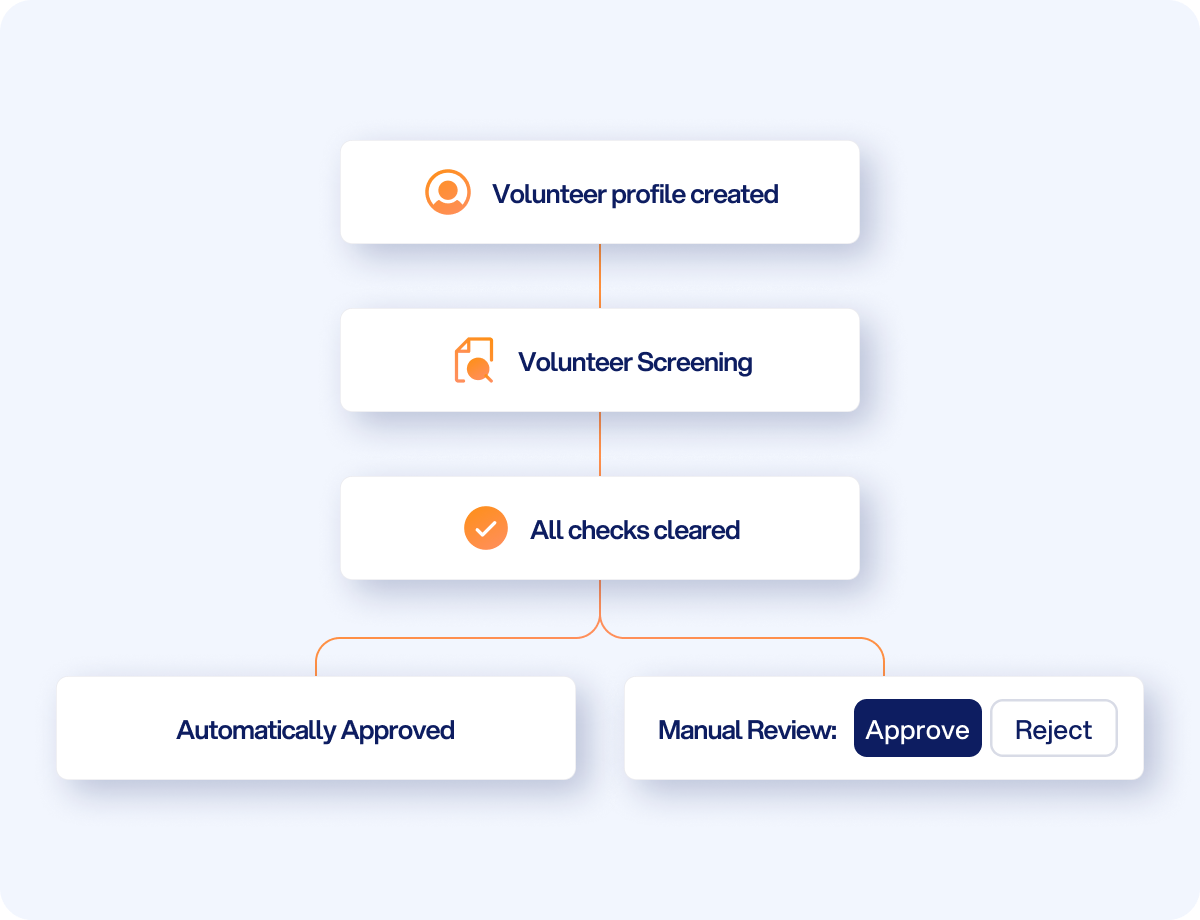
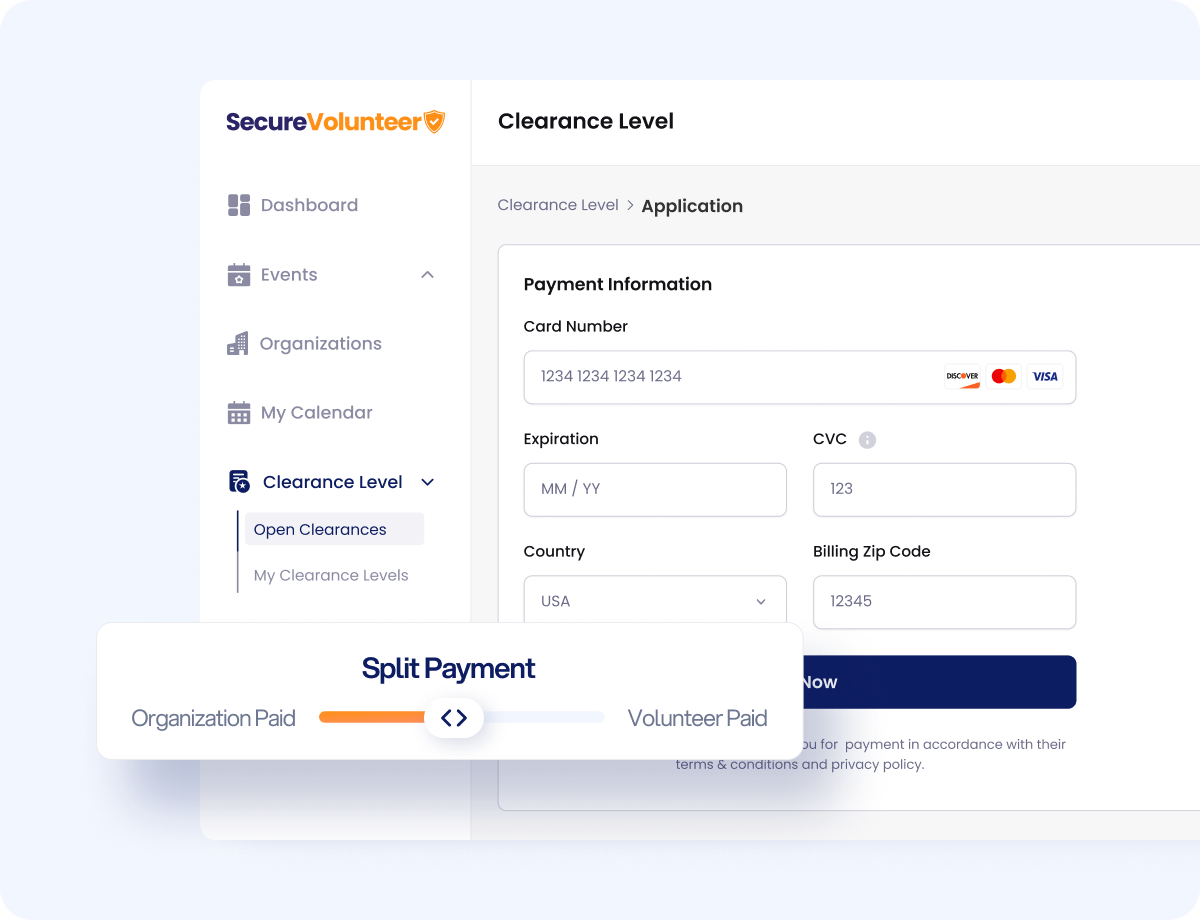
A policy only works if it’s followed every time. SecureVolunteer, by Bchex, builds yours into sign-up: you set a clearance level for each role, volunteers apply and give consent from their phone, approvals can run automatically when a check clears, and renewal dates are tracked for you.
Your church can pay for checks, ask volunteers to pay or split the cost.
For paid staff, Bchex runs employment background checks, and Chexpass handles visitor check-in at your building. Chexpass is free for one location. See how one church does it: how Centreville Baptist Church screens volunteers.
Frequently asked questions
What should a church background check policy include?+
Who should a church background check policy cover?+
How should a church get consent for background checks?+
What happens if a church background check finds a record?+
What is a safe church policy?+
How often should a church policy require rescreening?+
Should long-time members and leaders be screened too?+
Can a church use a free registry search instead of a background check?+
Put your church screening policy to work
SecureVolunteer handles volunteer sign-up, screening and renewals, and Bchex screens church staff. See church background checks.